Carbon farming is an approach in agriculture that aims to sequester atmospheric carbon in the soil and in the roots, leaves and wood of plants. It is also referred to as regenerative. The crux of the problem this approach is designed to overcome is that food production accounts for 1/3 of annual greenhouse gas emissions, making it one of the key drivers of climate change. At the same time, agriculture itself is suffering from extreme weather and crop yields are becoming less and less predictable, affecting the risks of farmers. To not only feed people but also protect the planet, carbon farming was invented. Its principle is not only to preserve the land, but also to improve it.
Carbon farming is the approach of developed countries
Tillage technology, which involves reducing carbon footprint, has existed in the US for 50 years and is gradually spreading to Europe. Carbon farming describes a system of farming principles that increases biodiversity, enriches soils, improves water systems and expands the ecosystem. And it does this by restoring organic matter to the soil and promoting soil biodiversity. Soil is at the center of attention. It has enormous potential for storing carbon and resisting climate change. Carbon-rich soil is also fertile, and fertile soil is in turn the basis for high crop yields and profitable agriculture. Scientists suggest that if soil organic carbon content increases by 0.4% per year globally, the carbon emissions affecting the climate could be fully offset.
Basic principles of carbon farming
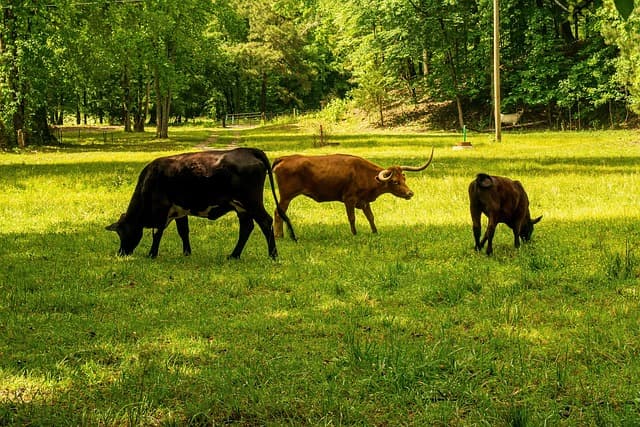
he essence and principles of the ecological approach to soil cultivation were described in detail in his book by the American author Gabe Brown, which helped spread the idea around the world. He tells how he transformed a 2000 hectare plot of land from intensively cultivated to regenerative. As a result, in 25 years the humus content in the soil increased from 1.4 to 6-10%, which ensured an increase in crop yields. In his book, the author articulates 5 basic principles of carbon farming: maximizing biodiversity; constant availability of ground cover plants; minimizing the use of agrochemicals and mechanical tillage; integrating animals; and preserving living roots in the soil. The approach involves continually seeding the soil and using intercrops to help prevent erosion and microbial death. Avoiding mechanical tillage will help preserve the soil structure and its natural microbiome that resides in the surface layer. Animals move nutrients and naturally fertilize the soil, which partially replaces the work of machinery. The retention of plant roots in the soil contributes to the formation of humus.
What are the prospects for implementing carbon farming
The process of humus accumulation and soil carbon conversion takes time. But the change in approach to soil treatment is worth it. Regenerative practices have two key advantages: they can counteract climate change and make agro-systems more resilient to disease, extreme weather and pests. In addition, implementing such in the long term helps farmers save money by reducing the amount of tillage and fertilizer application. Insufficient research in this area remains an urgent problem of carbon farming. In addition, according to experts’ estimates, the transition period may be about 4 years, during which time farmers will have to under-receive crops and incur increased costs. Nevertheless, some major European agro-producers have already started to implement carbon farming on their fields. And well-known fertilizer producers such as K+S and Arkop are working on developing safe agrochemicals.
A gradual transition to carbon farming
If you’re close to the principles of stewardship, but you’re not considering adopting a new approach right away, you can take small steps towards progressive technology. Start by optimizing your crop handling processes, including the use of modern grain cleaning equipment and grain windrowers. Such equipment can separate grain from impurities and foreign particles, thereby improving the quality and yield of agricultural products. It helps to reduce crop losses and also reduces the need for tillage, which in turn helps to conserve carbon.