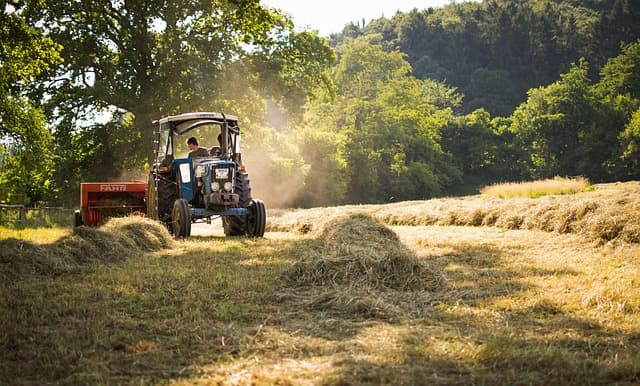
In the United States, the Scalf family from North Carolina has managed to restore 200 hectares of degraded farmland in five years using regenerative farming techniques. KH Farms, founded in 1949, had for many years used conventional agricultural techniques, including intensive plowing, monocultures and chemical fertilizers. These methods eventually led to soil depletion, lower yields, and financial hardship. In 2018, however, the family decided to fundamentally change their approach to farming.
The transformation was based on the principles of regenerative agriculture, a trend that emphasizes not only conservation but also active restoration of ecosystem functions. The family completely abandoned deep plowing and began using cover crops, crop rotation, composting, and managed grazing. Instead of annual plowing, fields are planted with perennial grasses and mulch is used to retain moisture and nutrients. One of the keys to success is releasing livestock to pasture on a rotational system, in which animals graze a small area for only a limited time, helping to naturally fertilize the soil and restore vegetation cover.
After a few seasons, farmers began to notice clear changes: the soil became darker and looser, began to retain water better, and the number of earthworms and other signs of biological activity increased. This reduced dependence on external inputs such as chemical fertilizers and artificial irrigation. Yields increased and product quality improved. In addition, by restoring soil structure and increasing organic carbon content, the farm became more resilient to the droughts and heavy rains frequent in the region in recent years.
Today, KH Farms serves as an example of how sustainable agricultural practices can not only revitalize the land, but also rebuild a family’s economy. This experience proves that even with limited funding and a climate prone to change, a shift to a regenerative approach can produce real results. Restoring 200 hectares in a relatively short period of time was made possible through a systematic approach, patience and an understanding of the role of soil as a living ecosystem. The Scalf family’s example is inspiring other farmers in the U.S. and beyond to rethink their approaches to farming for a more sustainable and healthy future.