Both technological innovations and old-fashioned farming techniques are being used.
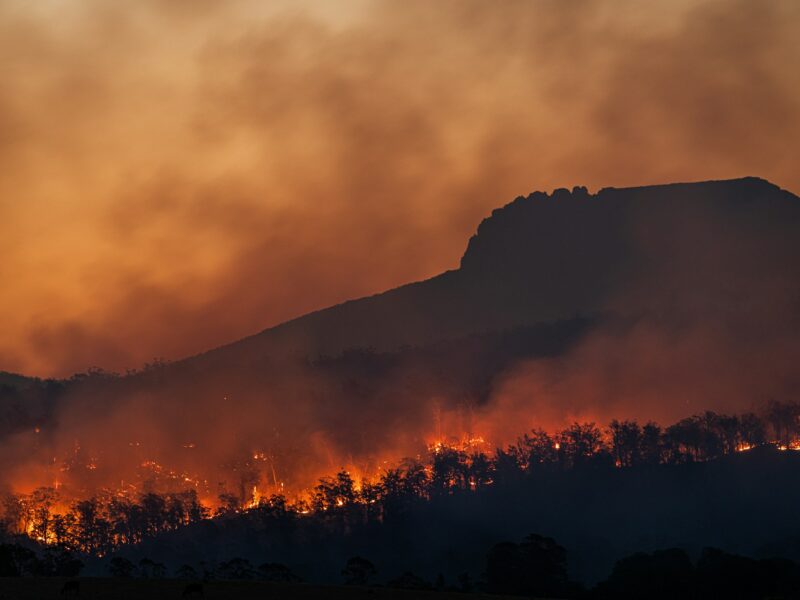
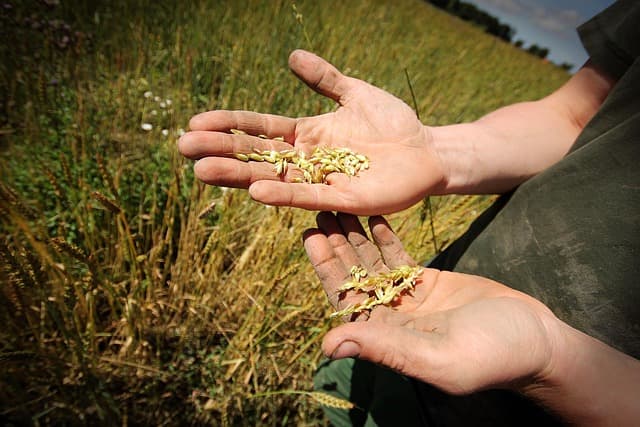
American farmers are trying to adapt to weather fluctuations that seem to be becoming the norm. Heat waves, drought and floods are causing unpredictable crop changes in California, Michigan, Illinois, Georgia, South Carolina, Florida and other states. That situation is likely to continue into the future, and farmers, small and large, are scrambling to increase irrigation efficiency, find ways to keep moisture in the soil and harvest crops faster.
“We’re seeing springs drying up,” says Wyoming farmer Pat O’Toole. He uses portable solar-powered pumps to pump water out of the ground and water his 6,000 sheep and 1,000 cows. “We are strongly reviewing all our activities,” he adds.
2012, with its record-breaking heatwave and drought, was a watershed year for many farmers. The drought affected 22 states, with crop losses the worst since 1988. Damages reached $31.8 billion, making the 2012 drought the seventh most damaging natural disaster on the list. These statistics have been kept since 1980.
Floods have come to California after a long drought, and farmers in the Midwest, Southeast and New England have been hit hard by extreme temperature fluctuations.
Two-thirds of 5,000 farmers surveyed in 2013 by Purdue University researchers believe the climate is changing. More than half see the need to take some kind of action to protect crops.
Ernie Shea, president of Solutions From the Land, a nonprofit organization founded three years ago that develops farming techniques for a changing climate, says farmers’ concerns are growing. He says farmers are taking losses and believe their businesses are at risk.
Soil preparation
Ohio farmer Fred Yoder believes he was lucky: He lost only half of his corn, soybean and wheat crop in 2012 because he used no-till technology. It’s an old-fashioned technique that farmers have been actively using again recently. Plant stalks and roots are not removed from the fields after harvest, but remain as a top layer that protects the soil from erosion and drying out.
“It’s a matter of survival,” says Yoder, who heads the North American Climate Smart Agriculture Alliance farmers’ association. – The only way to survive is to produce more with fewer resources.”
Zero tillage is only one of the techniques farmers use to improve soil health. Some plant cover crops – legumes or grass – to keep it from drying out in case of drought.
Flood control
Another problem that worries farmers is flooding of crops. After a drought in the Midwest was followed by flooding last year, sugar beet growers began installing drainage systems to divert excess water away from fields, the American Sugar Beet Growers Association says.
Farmers are also working to shorten the ripening and harvesting cycle: the longer the process, the greater the risk of crop failure due to weather changes. Growers are developing varieties of peppers that can ripen earlier before the drying heat of July and August, experts at the University of California said. Some farmers are using GPS and satellite-guided planting systems to seed fields as quickly and accurately as possible.
“When the weather is good, you want to get as much done as possible in a limited amount of time. The number of days suitable for harvest has never been so small,” says Greg Page, former CEO of food giant Cargill.
Temperature regime
Temperature fluctuations are cause for particular concern. California winemakers have installed giant fans to drive cold air away from vineyards in the event of a sudden cold snap. Scientists are looking for ways to deal with excessive warming that causes fruit trees to bloom too early and the fruit to suffer frost damage.
Scientists at Michigan State University are testing a fog generator system that could keep fruit and nut trees dormant for one to two weeks after warming temperatures. University professor emeritus James Flor says the system in 2013 would have helped apple growers protect orchards from early frosts, and he hopes it will be more widely used in 2018.
Other researchers are working to produce plant varieties that are more resistant to temperature extremes and pests, but this process of developing a new variety and bringing it to market can take decades, and weather patterns change much faster.