As the new millennium began, organizations such as NASA and the United Nations began to express their concerns about climate change and how it could affect the world’s population. Implementing sustainable practices in all areas of life is crucial to transitioning to a more eco-friendly lifestyle, ensuring a future on this planet. As the world’s population grows, sustainable agricultural practices can not only provide the necessary food supplies, but also eliminate or minimize harmful effects on the environment. In order to develop new methods of growing ag crops, numerous research groups have focused on studying desert plants. One might think that it is unwise to conduct such research since desert plants do not produce the crops and fruits that are most commonly eaten. However, deserts cover 33% of the Earth’s total land area, and what sets desert plants apart is their unique ability to adapt to habitats with extreme temperature fluctuations, high solar radiation, and water scarcity. If scientists can understand how these plants manage to survive, perhaps they can find a new method of farming that will allow farmers to explore previously untouched areas of land.
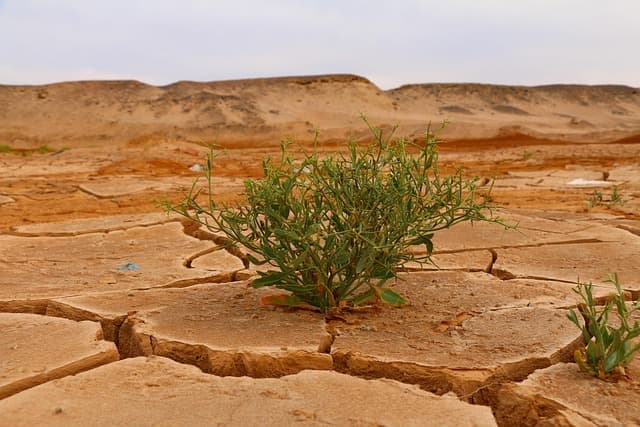
A quick glance is enough and you will notice how unusual desert plants are (see images below). The dry and hot conditions have given them a special appearance. The leaves of desert plants are very narrow, which helps them minimize their exposure to solar radiation. A dense layer of wax, which gives the plant an almost glossy appearance, prevents water from evaporating. Beneath the layer of sand and soil lies an extensive root system that allows the plants to access water. What’s also interesting about the root system of desert plants is how closely its functioning depends on microorganisms (to learn more about how microorganisms help plants, read Deeply Rooted Connection). It turns out that desert soil is full of microbes!
PGPB or Plant Growth Promoting Bacteria are bacteria that stimulate plant growth and even protect plants from pathogens. These bacteria play such an important role in the life cycle of plants that their presence is essential for the survival of the plant. Not surprisingly, desert plants have their PGPBs as well. Desert plant PGPBs are usually found in rhizomes, soil particles that are attached to the root system. The two dominant bacterial species in rhizomes are represented by Proteobacteria and Actinobacteria. Proteobacteria capture nitrogen atoms from the air, which are an essential element for the growth and survival of every plant. Actinobacteria are known for their physiological adaptations to a variety of extreme conditions such as environments with high or low pH values, extreme temperatures, or abnormal levels of radiation and pressure.
To accelerate plant growth without the use of fertilizers or other compounds that can negatively affect the environment, some researchers have proposed an alternative method. What if you could isolate PGPB from one plant, and transplant these bacteria to the roots of a new plant? A 2008 study by Aseri and his group of colleagues showed that PGPB could be used as a biofertilizer in arid regions of the planet, such as the Thar Desert (India). In the experiment, which lasted 5 years, the researchers continuously enriched pomegranate trees with the nitrogen-fixing bacteria Azotobacter chroococcum. This plant was chosen because pomegranates are usually grown in regions with dry soils and hot climates, such as the Indian subcontinent or Mediterranean countries. Therefore, it was hypothesized that this microorganism would be able to support and enhance plant growth by supplying pomegranate trees with the necessary nitrogen compounds. The results demonstrated that the pomegranate trees grew noticeably and were much more prolific. Higher chlorophyll content and better nutrient uptake were also noticed. Researchers have proven that this method is effective and that it can be used for farming in countries with unfavorable climates.
For many years, scientists around the world have been working on research that seeks to find ways to utilize desert microbes in farming and crop production in dry regions of the planet. One of the most widely publicized projects, DARWIN21, aims to study microbial life in the deserts of the Arabian Peninsula. The project started with the idea of exploring new opportunities to increase the rate of food production in countries with hot and arid climates. Very often these regions are economically dependent on imports and foreign aid because the climate in these countries is unfavorable for agriculture. To solve this problem, researchers have focused on studying desert plants and their adaptation mechanisms. This led to the creation of the world’s first collection of desert microbes. Today, scientists are studying the microbes found in rhizomes and how they can increase the plants’ resistance to stressful conditions such as drought or water shortages. Undoubtedly, projects like this will help introduce sustainable farming practices. Who knows, maybe in a couple of years farmers will be able to grow fruits and vegetables in the Sahara Desert?